The short answer. If foundation looks even when applied but later develops gaps or moves, start with the change during wear. Note the time, face area, shine, sweating, wiping and contact from glasses or your hands. This is a different investigation from a base that looks thick immediately or products rolling into crumbs while you apply them. Appearance alone does not identify one ingredient or prove that you need more hydration.
Compare the same area over time
A wear log is a memory aid. Check the same area at three points in the day and write down what you see and what happened in between. Photos taken in the same light can support the notes, but they show cosmetic appearance only. They do not measure skin barrier function, hydration or sun protection.
| Checkpoint | Appearance | What happened since the previous check |
|---|---|---|
| Just after application | Even, or already uneven in one place | Products, tool and amount used, and the time you finished |
| First noticeable change | Where the finish first shifted and how it looks | Shine, sweat, wiping, glasses, hands on the face, weather, hours elapsed |
| Later in the day | Whether the change spread or stayed in one place | Any blotting, touch-up or reapplication, and activity since |
Look for a pattern, not a universal culprit
Different areas can change differently. Record shine and any wiping or friction before a gap appears; a temporal association is a clue, not proof. Historical cosmetic-formulation research from 1999 linked particular unsaturated free fatty acids in sebum with optical changes in foundation films, particularly shiny spots. It did not test Baegayul and does not explain every modern separation complaint. Source: Nomura et al., 1999, Selective Adsorption of Fatty Acids for the Prevention of Foundation Makeup Deterioration.
Test one optional layer or habit
Record a baseline routine first. On a comparable day, omit only one optional extra layer, such as an additional primer, while keeping the needed moisturizer, labeled sunscreen use, prescribed treatment, foundation, tool and amount unchanged. Note whether the change improves, worsens or leaves the result unchanged. Repeat before drawing a conclusion. If you change powder, skincare and foundation together, the result cannot tell you which adjustment mattered. Weather, activity and reapplication are real differences to record, not hide.
Can a water-based or silicone-based label predict compatibility?
Not by itself. Formulation research from 2005 describes foundation emulsions that contain both water and silicone oils. Our practical inference is to test the finished-product combination rather than diagnosing it from the presence of one ingredient. That is an inference, not a comparative compatibility trial. This page does not offer a compatibility score or calculator. Source: Nagatani, 2005, Development of Silicone W/O Emulsions and Application to Cosmetic Foundations.
Know when to use a different guide
If the base already looked heavy or patchy immediately after application, start with the cakey-foundation guide. If products roll into crumbs while you apply them, that is pilling, a separate application-time problem. If the base is already on and you want a limited rescue now, the touch-up guide covers when to press, blot and stop. If the skin itself is persistently irritated or peeling, seek qualified clinical advice rather than running further routine experiments. A photographed finish describes appearance; it does not measure skin barrier function.
Heavy or patchy right away? Why does my foundation look cakey even when my skin is oily?
Crumbs while applying? Why does my makeup pill over skincare?
Need a rescue right now? How to fix cakey makeup without starting over
Where our serum fits
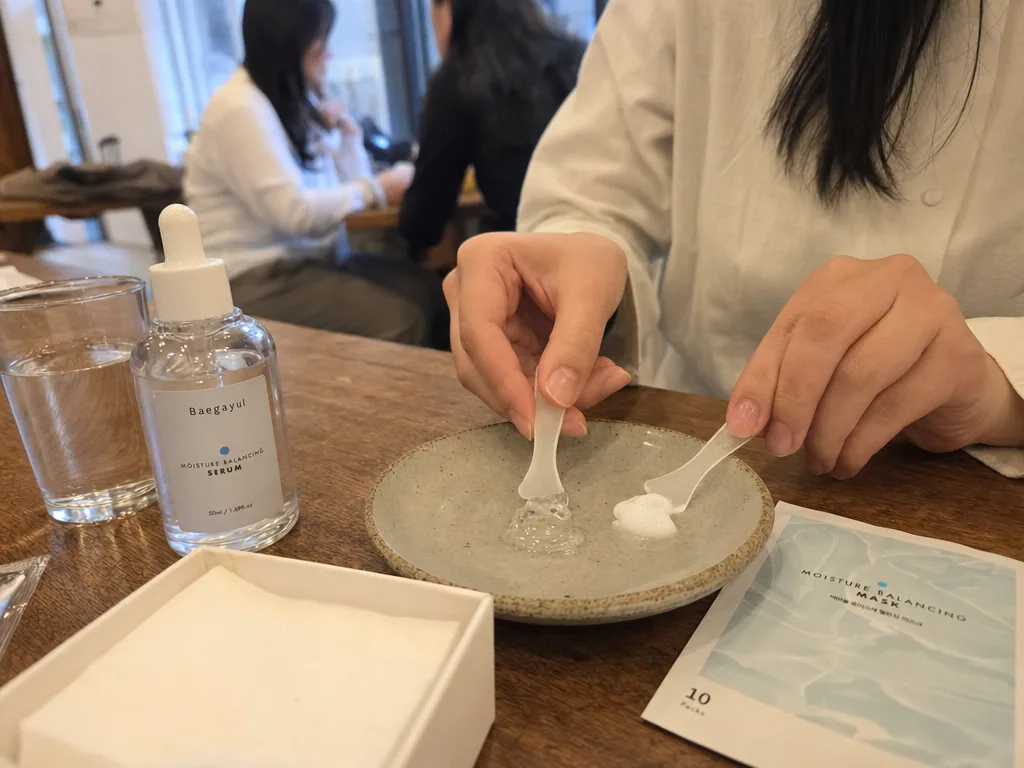
If your wear log points to a base that looked dry from the first checkpoint, a lightweight morning hydration step is one optional variable to test. We have not shown that our serum extends foundation wear or prevents separation, and this guide can end with no purchase at all.
Sources and evidence note
This page is sourced editorial guidance. No Baegayul makeup-wear trial has been performed for it, and the observation steps above are a suggested method, not completed research. Sunscreen stays at its labeled use and prescribed treatments stay as your clinician directed. The wear log is an inference tool, not a comparative trial, and it cannot prove which product caused a change.
- Nomura et al., 1999, Selective Adsorption of Fatty Acids for the Prevention of Foundation Makeup Deterioration Historical formulation research on particular sebum fatty acids and optical changes such as shiny spots in foundation films. Shine-mechanism context only; it does not test any Baegayul product, cover every separation case or diagnose skin.
- Nagatani, 2005, Development of Silicone W/O Emulsions and Application to Cosmetic Foundations Formulation research on silicone water-in-oil foundation systems. Cited to show that behavior depends on the full composition, not to predict compatibility between specific products.
This article is intended for general education about skincare and cosmetic ingredients. It is not medical advice and does not diagnose or treat any condition. If a concern persists or worsens, please consult a licensed dermatologist.