The short answer. Makeup pilling is product film rolling up into small flakes or balls as you apply. It is not automatically dead skin, and it does not prove that your skincare failed to absorb. Composition, your skin surface, how much you apply, how many layers you stack, and how you rub can contribute. A three-morning, one-change test finds the likely cause.
Pilling is not the same as flaking
Dry-skin flaking is loose skin lifting from the surface. Pilling is different: it is the film of a product, or several products, rolling into small balls or crumbs, usually the moment a finger, sponge, or brush moves over it. If the flakes appear only while you apply and the same skin was smooth a minute earlier, that pattern can point toward rolled-up product film rather than dead skin.
That distinction matters because the two get opposite advice. Flaking gets treated with exfoliation, which does nothing for pilling and can leave skin more reactive. Pilling responds to changes in amount, layers, settle time, and technique, which is what the rest of this page is about.
What can make makeup pill
A 2024 study in Skin Research and Technology set out to understand why skincare products pill and reported that product composition, skin physiology, and the way products are applied can all play a part. That means there is rarely one villain. The popular rule that pilling always comes from mixing water-based and silicone-based products is not established by that paper, so treat it as one possibility to test, not a diagnosis. Source: Understanding the causes of skincare product pilling, 2024.
| Likely cause | What it looks like | What to change |
|---|---|---|
| Too much of one product | Rolling starts on the step where you applied the most, before anything else goes on top | Use noticeably less of that one product. If it is sunscreen, keep the labeled amount and adjust something else. |
| Too many leave-on layers | Each layer is fine alone, but the stack crumbles once makeup goes over it | Remove one nonessential leave-on layer. Sunscreen and clinician-directed treatments stay. |
| Insufficient film-settle time | The previous layer still feels wet or tacky when the next one lands | Let each film settle to the finish the directions describe before adding the next step. |
| Rubbing or buffing after films form | Skin looked smooth until a brush, sponge, or fingers swept back and forth | Press and pat makeup onto the surface instead of rubbing over set films. |
| A specific product combination | Pilling appears only when two particular products meet, whatever the amount or technique | Reorder or separate the pair and check. This is a pairing to test, not a rule about whole categories. |
The three-morning, one-change test
Most advice tells you to swap products. A cheaper way to find the cause is to keep your products and change one variable each morning, so the result can point at a likely cause. Do not remove sunscreen, reduce it below its labeled amount, or stop a treatment a clinician directed you to use.
Morning 1, baseline. Use your current routine exactly as usual, same products, same amounts, same order, same technique. Note the first step where rolling begins and what you were doing at that moment. Do not fix anything yet; this morning only tells you where to look.
Morning 2, simplify one optional layer. Remove only one nonessential leave-on layer, for example a second hydrating layer or a primer you are not sure you need, and keep everything else identical. If the pilling eases, the number of layers or that particular layer is a likely contributor. If it stays, one morning makes that layer a less likely contributor; repeat before concluding, and it goes back tomorrow either way.
Morning 3, change technique only. Return to the baseline products at the same amounts, in the same order, with your usual timing between steps. Change only the motion: press makeup onto the surface rather than rubbing or buffing it in. If this morning is smooth, technique is a likely contributor; repeat before replacing products. Settle time is a separate test from the table above, not a second change on this morning.
Change one variable per morning. If you cut a layer, add settle time, and change technique on the same day, a good result cannot tell you which change mattered. We do not give a wait time in minutes because none is sourced here; the product's directions and the visible, touchable finish are the guide.
What the evidence does and does not say
The 2024 study followed 528 women aged 20 to 49 in Guangzhou under a defined application protocol, and 217 of them experienced pilling. Within that protocol, sunscreen generated most of the observed pilling events, and foundation applied over sunscreen sometimes reduced sunscreen-induced pilling. That is a counterintuitive study result, not a consumer rule, and it is not a reason to use less sunscreen. The population and protocol are a limitation. The paper does not study Baegayul, does not prove a universal ingredient-pairing rule, and does not show that any Baegayul product prevents pilling.
Why we test instead of guess
Baegayul's founder, Dr. Jo Seok-yong, a Korean medicine doctor and Ph.D., has described how the brand relies on objective, unsparing review feedback rather than internal conviction. In an interview with the Korean review platform Hwahae, he explained that brands easily fall into confirmation bias and that the company built its surveys around what customers actually reported. That interview was about the brand's mask and its reviews, not about makeup pilling. The same habit is what this page asks of you: fewer layers, one change at a time, and an honest read of what happened.
Where a lightweight serum fits
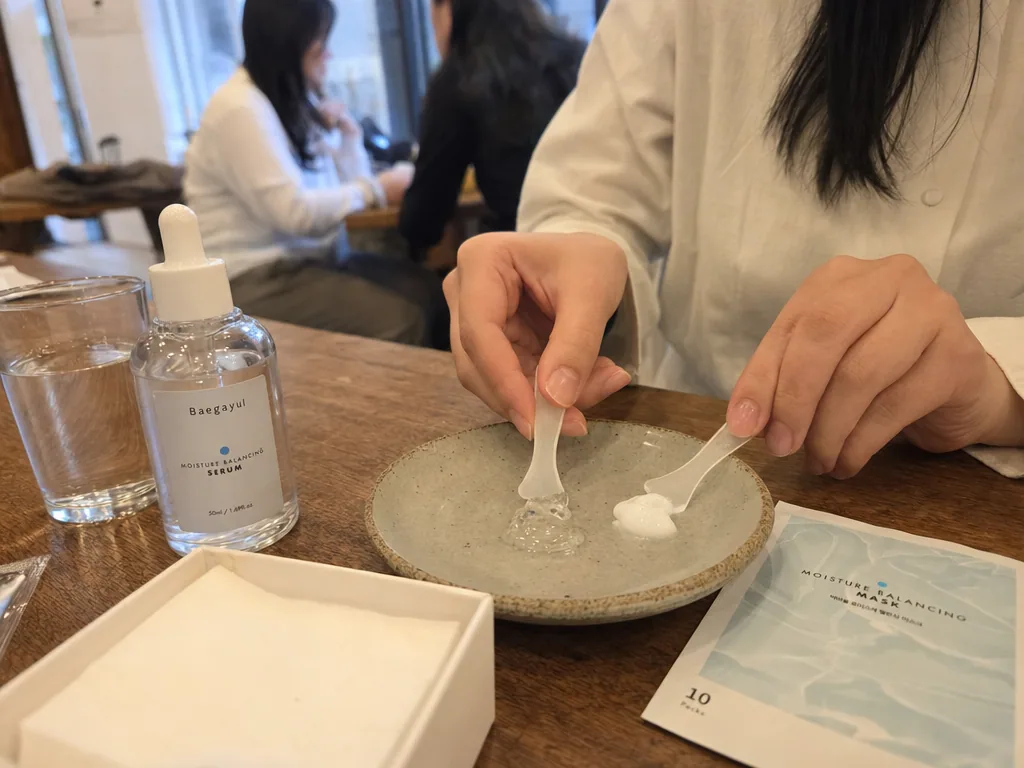
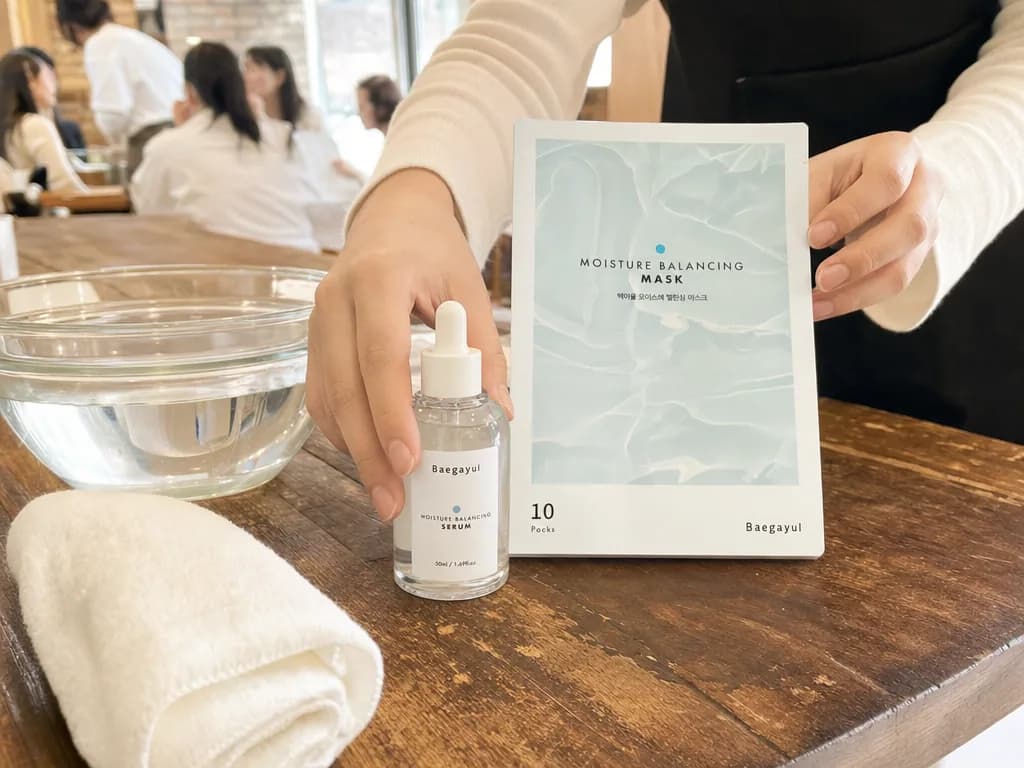
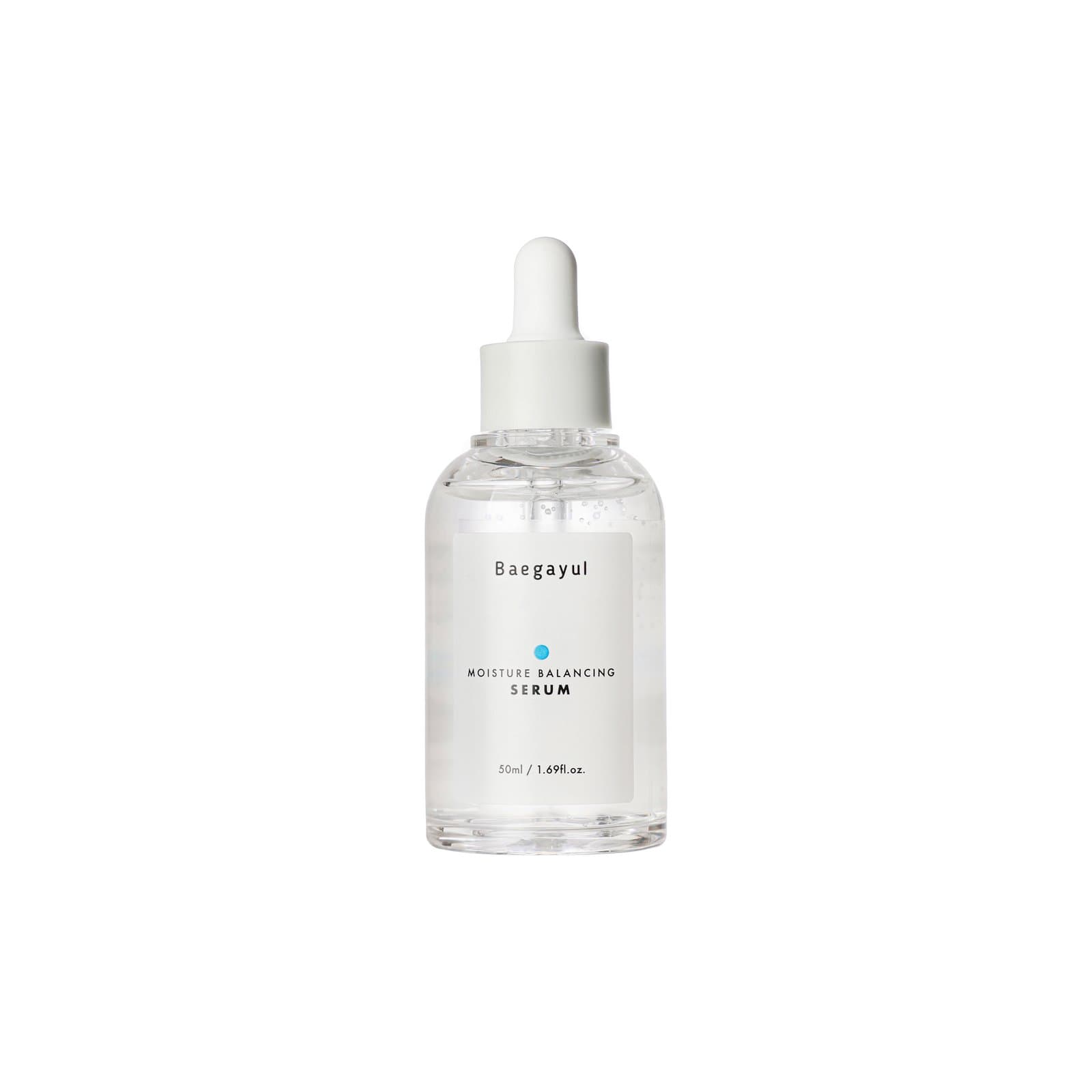
If Morning 2 pointed at the number of layers, the fix is a shorter stack, not a new product. In a simplified routine there is room for one optional hydration layer under moisturizer, and the Moisture Balancing Serum is one lightweight, water-based option for that slot. Customer reviews describe its texture in both directions: reviewers call it lightweight, non-greasy, and quick to layer, one wrote that "makeup applies well in the morning", and another found it thin, said hydration felt lacking when used alone, and noted that "applying a lot makes it sticky". Those are individual texture impressions. They are not evidence about pilling, and they do not mean the serum suits every makeup.
- Understanding the causes of skincare product pilling, Skin Research and Technology, 2024 (PMC11294729) 528 women aged 20 to 49 in Guangzhou under a defined protocol. It did not study Baegayul and does not establish a universal ingredient-pairing rule.
- Hwahae interview with founder Jo Seok-yong on review-led development In Korean. About the brand's review philosophy, not a study of makeup pilling.
Serum feels tacky under makeup? Why does hyaluronic acid serum feel sticky?
Building a shorter stack: A minimal Korean skincare routine for reactive skin
This article is intended for general education about skincare and cosmetic ingredients. It is not medical advice and does not diagnose or treat any condition. If a concern persists or worsens, please consult a licensed dermatologist.