The short answer. Reactive skin, meaning skin that seems easily irritated or overwhelmed, usually does better with fewer repeatable steps. Start with three essentials: a gentle cleanser, a moisturizer, and broad-spectrum SPF 30 or higher in the morning. Add one lightweight hydrating step only if skin still feels tight once that baseline is tolerated. Reactive describes comfort, not a medical diagnosis.
What people mean by reactive skin
Reactive is everyday language, not a clinical category. People use it for skin that stings from products others find mild, flushes after a new step, or feels tight and uneasy when a routine gets longer. It is not a fixed skin type either: dry, oily, and combination skin can all go through reactive stretches and then settle again.
That matters for how you shop. A reactive stretch is a prompt to remove variables, not to add a product that promises to fix it. If you have burning that persists, swelling, a rash, or symptoms that keep getting worse, stop the new products and see a licensed clinician rather than adjusting the routine again.
K-beauty just went nationwide. Your routine does not have to.
With Korean beauty becoming easier to discover in the United States, the temptation is to add more. People who describe their skin as reactive often prefer fewer, repeatable steps. Source: CJ Newsroom on OLIVE YOUNG's nationwide U.S. K-beauty expansion, August 2026.
Korean skincare has never really been about the number of steps. The habit worth borrowing is the gentle one: mild cleansing, water-light hydration, and sun protection whenever you are outside, repeated without drama. More products on a shelf near you is category context. It is not a reason to change a routine that already feels comfortable.
One decision path, not a shelf
Most minimal-routine guides hand you a list of four or five products and stop. A reactive stretch needs a sequence instead: start with the essentials, decide whether anything is missing, then change one thing at a time.
Start: gentle cleanser, moisturizer, SPF 30 or higher. Lukewarm water and a mild cleanser at night, lightly or not at all in the morning. A moisturizer matched to how skin feels: a light gel or lotion if it runs shiny, a richer cream if it feels rough as well as tight. Broad-spectrum, water-resistant SPF 30 or higher in the morning on skin that clothing will not cover, on any day you will be outside, which is what the American Academy of Dermatology recommends. If skin feels tight or squeaky after cleansing, the cleanser is doing too much and is the first thing to swap.
Add one lightweight hydrating step only if skin still feels tight. Once the three essentials are tolerated and skin still feels tight or dehydrated by midday, add a single water-based layer such as a light serum or essence under the moisturizer. One is enough. If the essentials already feel comfortable, there is nothing to add. Stacking several hydrating layers is an easy way for a short routine to quietly become a long one.
Makeup rolling into flakes over the routine? Why does my makeup pill over skincare?
Change one product at a time. Introduce or swap one product, then leave the rest of the routine alone long enough to judge it fairly. A stable observation window is a habit, not a medical timeline: long enough that you are reacting to a pattern rather than a single evening. Fragrance-free is a reasonable default while you observe, since it removes one variable.
When not to add a serum. Active burning, swelling, a rash, or symptoms that keep getting worse are not a hydration gap. They need a qualified clinician, not another skincare layer. Pause new products, keep the gentlest version of the essentials, and get advice before changing anything else.
A rhythm, not a regimen
Baegayul is a quiet, balance-first skincare philosophy from Seoul. It was created by Jo Seok-yong, a Korean medicine doctor and Ph.D., around a simple idea: hydrate, soothe, and give skin room to settle rather than pushing it. The brand describes this as a rhythm, not a regimen, and it is why the range is deliberately small.
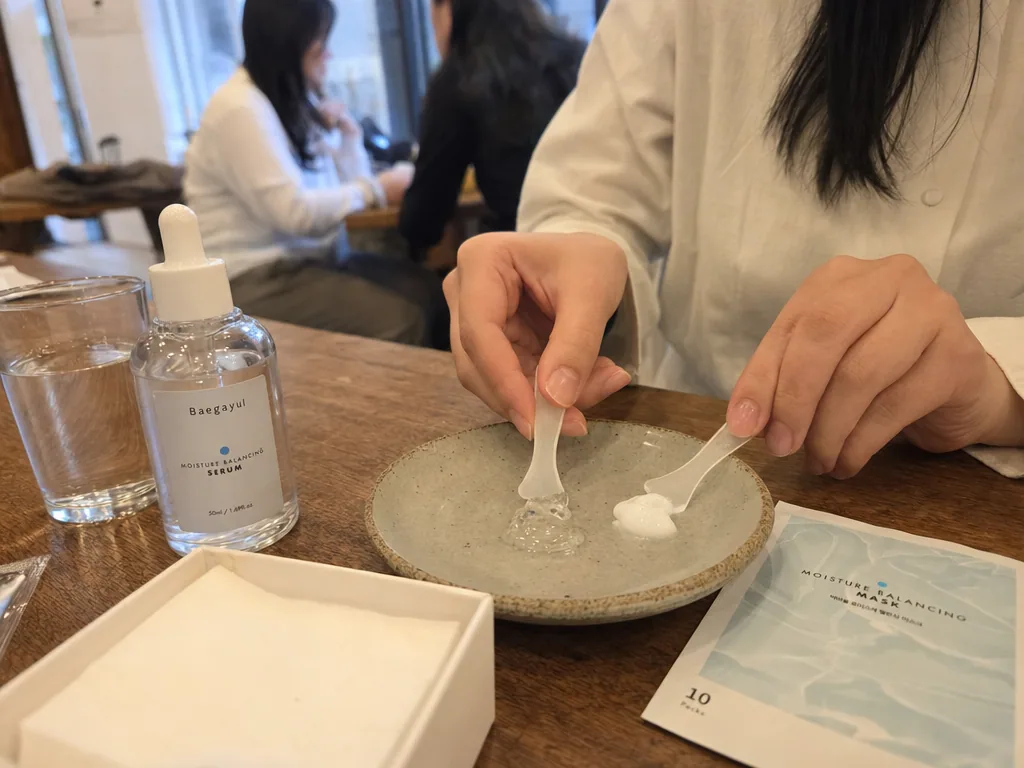
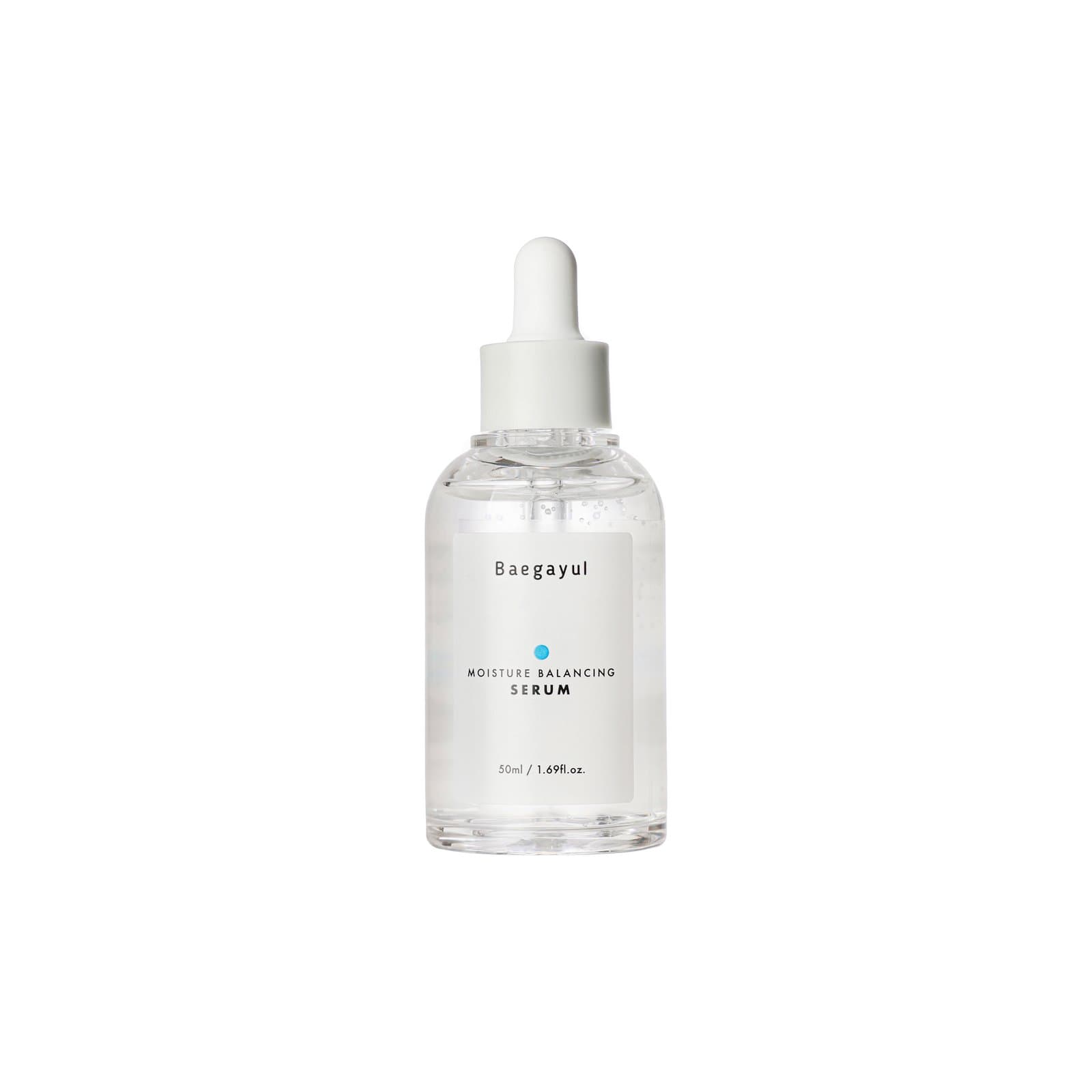
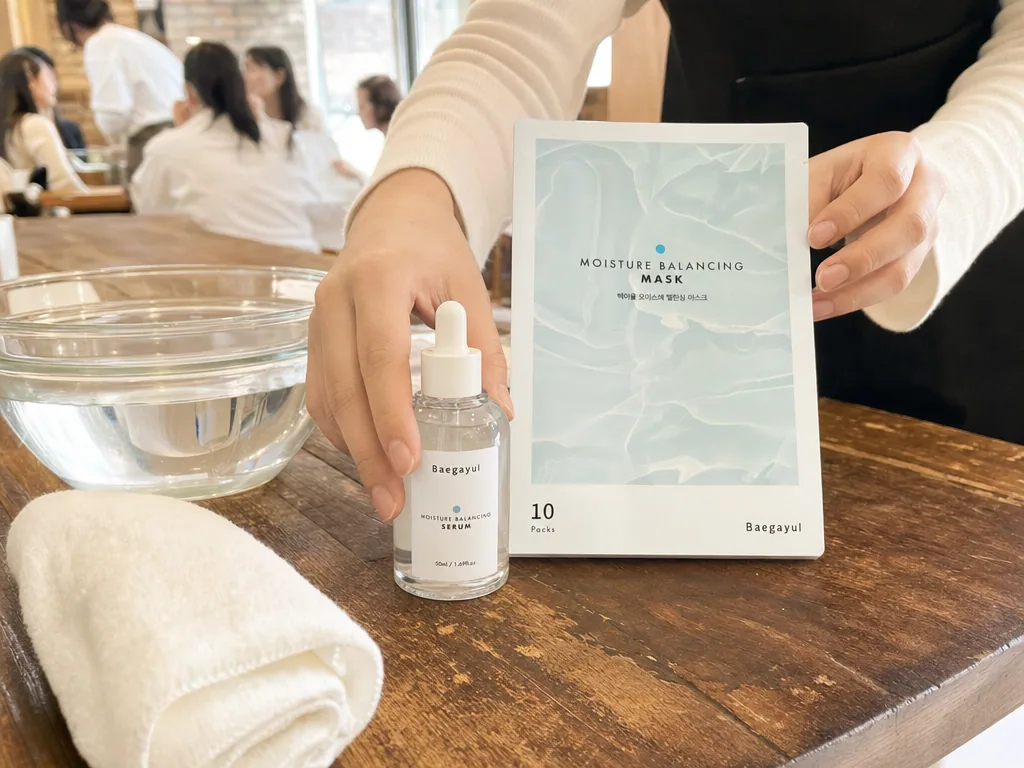
The products are cosmetics, not treatments. The Moisture Balancing Serum is a fragrance-free, water-light hydrating serum formulated for sensitive, dehydrated, and combination skin, with sodium hyaluronate, glycerin, and betaine as its hydration system. It belongs in only one place in the path above: the conditional hydrating step, if the essentials are tolerated and skin still feels tight. If they are not, or if skin is actively reacting, it is not the next move. Any well-made water-based hydrator can fill that slot.
What the evidence supports
The American Academy of Dermatology recommends broad-spectrum, water-resistant sunscreen with SPF 30 or higher on skin not covered by clothing every day you will be outside, which is the basis for keeping sunscreen among the essentials. A 2024 review of epidermal barrier function describes how the outer layer of skin limits water loss and is explicit that the underlying pathophysiology of dry and sensitive skin is not fully understood, so we do not present any mechanism behind the sensations people describe as reactive. Nothing on this page is evidence about how any product, including ours, will perform for you.
- American Academy of Dermatology: sunscreen FAQs
- Epidermal barrier function in dry and sensitive skin, 2024 review
- CJ Newsroom: From Seoul to Times Square, OLIVE YOUNG's nationwide U.S. K-beauty expansion (August 27, 2026) Category context only. Baegayul is sold on Amazon US and baegayul.com.
- CJ Newsroom: OLIVE YOUNG to open first U.S. store in Pasadena Category context only.
Shiny and tight at once? Oily but dehydrated? The Korean term is soobooji.
Also useful: The shortest routine that actually works
About the brand: Balance-first Korean skincare for skin that wants a rhythm, not a regimen
More on the founder: Dr. Jo Seok-yong, Korean medicine doctor and Ph.D.
This article is intended for general education about skincare and cosmetic ingredients. It is not medical advice and does not diagnose or treat any condition. If a concern persists or worsens, please consult a licensed dermatologist.