The short answer. Your forehead looks shiny, but foundation still looks thick around your nose or dry on your cheeks. Cakey foundation describes a heavy, built-up finish. That differs from makeup catching on flakes, developing gaps during wear, or rolling into crumbs as you apply it. Check the appearance, location and timing before adding hydration or replacing products.
Start with what you can see
Before buying or removing anything, check the same area in daylight and note the pattern. The four rows below are observations, not diagnoses. Normal pores and texture do not mean makeup has failed, and more than one pattern can appear on the same face.
| What you see | When it appears | What to note |
|---|---|---|
| Thick or powdery finish | Immediately after application | Whether the change first appears after foundation, concealer or powder, especially where you add extra coverage |
| Makeup catches on flakes | During or right after application | Whether the flakes were visible before makeup and whether the area feels irritated |
| Coverage develops gaps | Later in the day | When and where the finish changes, and any shine, sweat, wiping or friction before it |
| Crumbs form as you apply | While applying | The product you just added and the motion when rolling begins. That pattern belongs to the pilling guide |
Crumbs while applying? Why does my makeup pill over skincare?
Oily skin does not answer every makeup question
Shine, visible flakes and a thick layer of pigment are different observations. A shiny T-zone does not identify why your makeup looks heavy, and it does not prove that you need another serum. Compare areas separately: cheeks that look flaky before application need a different question from a nose that loses coverage after hours. Treat oily but cakey as a problem to investigate, not a dehydration diagnosis.
Oily but dehydrated at the same time? What is oily but dehydrated skin?
Why does it happen around my nose?
Location alone does not establish a cause. Compare the nose immediately after application with its appearance when the problem starts. Record extra foundation, concealer or powder applied there; separately record contact from glasses, tissues or your hands. If crumbs appear while applying, follow the pilling guide. If the finish changes only later, follow the wear-time guide. Avoid repeatedly buffing an uncomfortable or visibly peeling area.
Choose one change for the next application
Record a usual morning first. If the finish looks built up immediately after foundation, test less foundation in that area while keeping skincare, tool and powder the same. Test powder amount on a separate day if that step is where the heavy finish appears. Thin, targeted application is practical makeup guidance, not a Baegayul clinical finding. Repeat a promising comparison before concluding; do not change products, amounts, tools and waiting time together. Keep sunscreen at its labeled use and any prescribed treatment as your clinician directed. No universal waiting time between layers is prescribed here. Source: L'Oreal Paris, how to fix cakey makeup.
Flaking is not an automatic exfoliation instruction
Some treatments can increase peeling or sensitivity, and more exfoliation can worsen dryness. Dermatology guidance says exfoliation should match skin type and be done carefully. Persistent redness, burning or scaling deserves qualified clinical advice, not a makeup-product upsell. Do not stop prescribed treatment based on this article, and keep sunscreen at its labeled use. Source: American Academy of Dermatology, how to safely exfoliate at home.
Where optional lightweight hydration fits
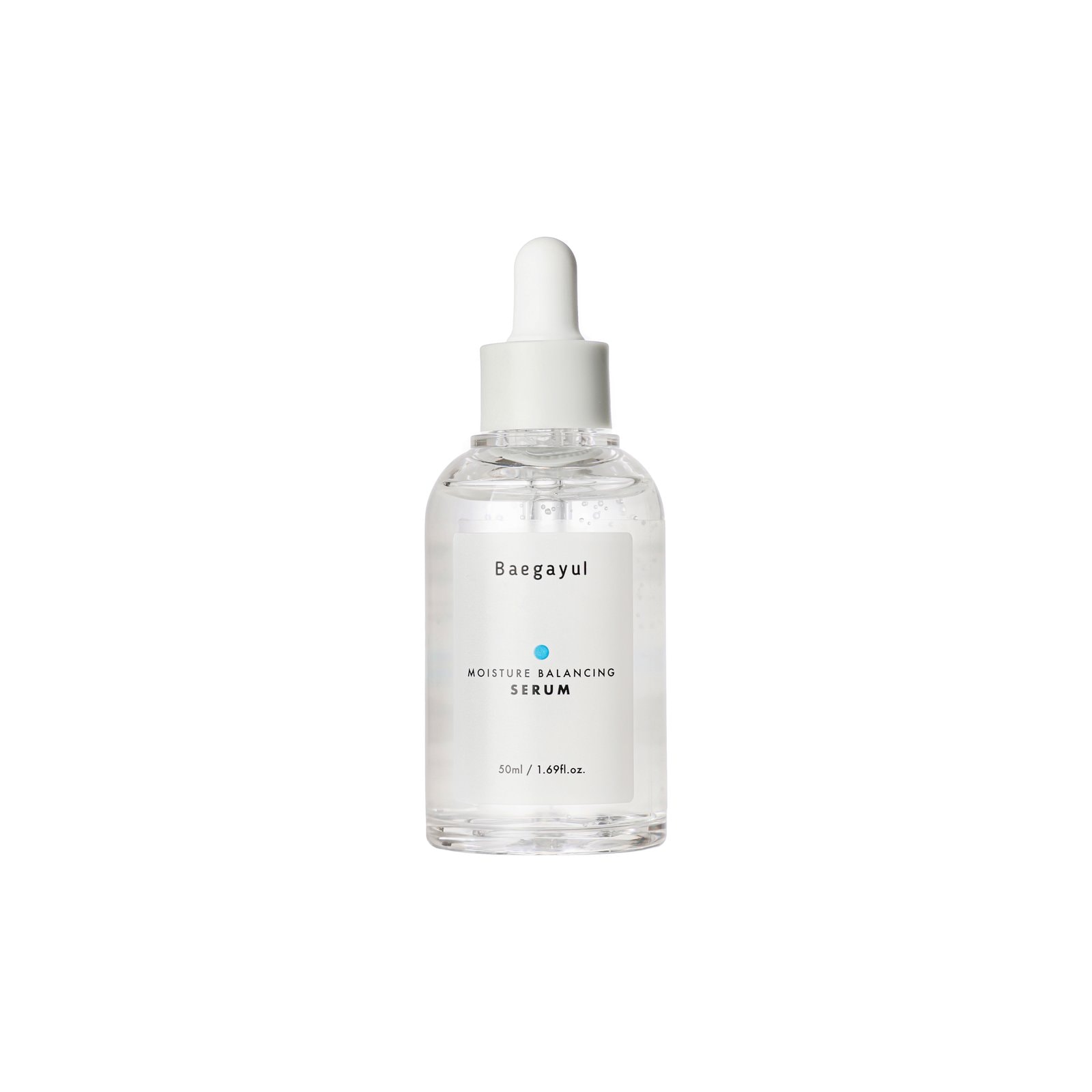
If, after these observations, you decide to keep a lightweight morning hydration step, the serum below is one option. Many routines already work without an extra layer, and choosing nothing new is a valid result of this guide.
Sources and evidence note
This page is sourced editorial guidance. No Baegayul makeup-wear trial has been performed for it, and the observation steps above are a suggested method, not completed research. Sunscreen stays at its labeled use and prescribed treatments stay as your clinician directed.
- L'Oreal Paris, how to fix cakey makeup A cosmetics manufacturer's practical makeup guidance, cited for thin, targeted application only. Not a clinical source and not evidence about any Baegayul product.
- American Academy of Dermatology, how to safely exfoliate at home Public dermatology guidance on matching exfoliation to skin type and avoiding some methods with certain prescription products. Not an instruction for your skin.
Already wearing makeup right now? How to fix cakey makeup without starting over
Looked fine at first, then changed? Why does my foundation separate after a few hours?
This article is intended for general education about skincare and cosmetic ingredients. It is not medical advice and does not diagnose or treat any condition. If a concern persists or worsens, please consult a licensed dermatologist.