The short answer. A sheet mask goes after cleansing and toner, if you use one, and before moisturizer. Unfold it over clean skin, leave it on for fifteen to twenty minutes or the time on the pack, remove the sheet, and pat in the remaining essence. Do not rinse unless the product directions say otherwise, then finish with moisturizer.
That is the order in the directions for a hydrating sheet mask like Baegayul's, and it is the order this page explains. It is not a universal rule for every mask. Product directions control, so if a mask's pack says something different, follow the pack.
Where the sheet mask sits in the routine
| Step | What to do | Why it sits here |
|---|---|---|
| Cleanser | Wash and pat dry | The mask directions start from clean skin, so cleanse first. |
| Toner, if used | Apply and let it settle | Optional. The mask directions place toner before the sheet. |
| Sheet mask | Smooth on, wait the stated time, remove, pat in the essence | A hydrating mask can serve as the hydrating step. Leave it on only as long as the directions say. |
| Serum, optional | Only if you want it and each product's directions allow it | A hydrating mask can already serve as this step. Stacking more layers is not the goal. |
| Moisturizer | Apply over the patted-in essence | The mask directions put moisturizer after the sheet comes off. |
| Sunscreen, morning | Broad-spectrum SPF 30 or higher if you will be outside | The last step of a morning routine, after moisturizer. |
Sheet mask before or after serum?
There is no universal rule here. A hydrating sheet mask can serve as the routine's hydrating step. If you also use a serum, follow each product's directions for where it sits, and skip a layer rather than add one just to have more steps.
Sheet mask before or after moisturizer, and where SPF fits
For a hydrating sheet mask like Baegayul's, the directions put moisturizer after the mask, on top of the essence you patted in, not under the sheet. In the morning, sunscreen follows moisturizer. The American Academy of Dermatology recommends that everyone use a sunscreen that offers broad-spectrum protection, SPF 30 or higher, and water resistance, and says to apply sunscreen every day on skin not covered by clothing if you will be outside. A morning mask does not replace that step.
Common ordering mistakes
- Masking before cleansing. The mask directions start from clean skin, so the sheet should not go on over sunscreen or makeup.
- Putting moisturizer under the sheet. The mask directions put moisturizer after the mask comes off, over the patted-in essence.
- Leaving the sheet on past its directions. Longer is not better; follow the wear time on the pack.
- Assuming more layers are always better. A hydrating mask can be the hydrating step, so a masking night can have fewer steps, not more.
How often, and how long
This page is about order. Frequency and wear time have their own page, including what a 2024 randomized study of mask types and wear times does and does not show. In short: it compared wear times in healthy volunteers, it was not a study of any Baegayul product, and it does not establish a universal routine order or weekly frequency.
Frequency and wear time: How often should you use a sheet mask?
Choosing a fragrance-free sheet mask? Fragrance-free Korean sheet masks: compare the current labels
How the Baegayul Moisture Balancing Mask fits this order
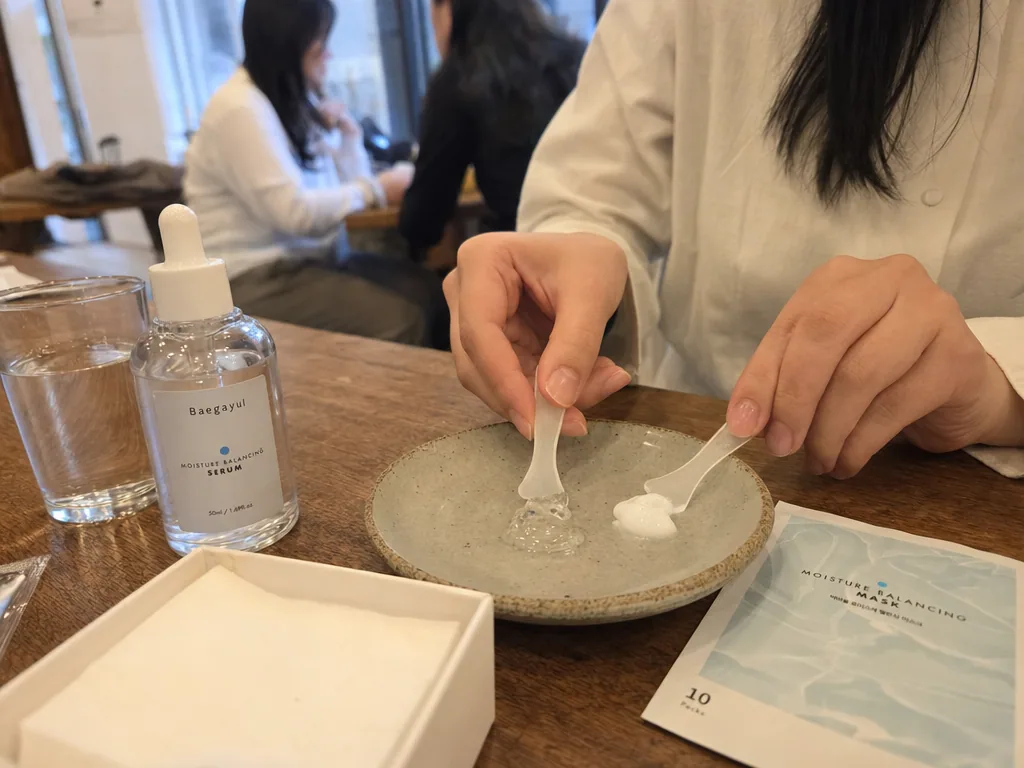
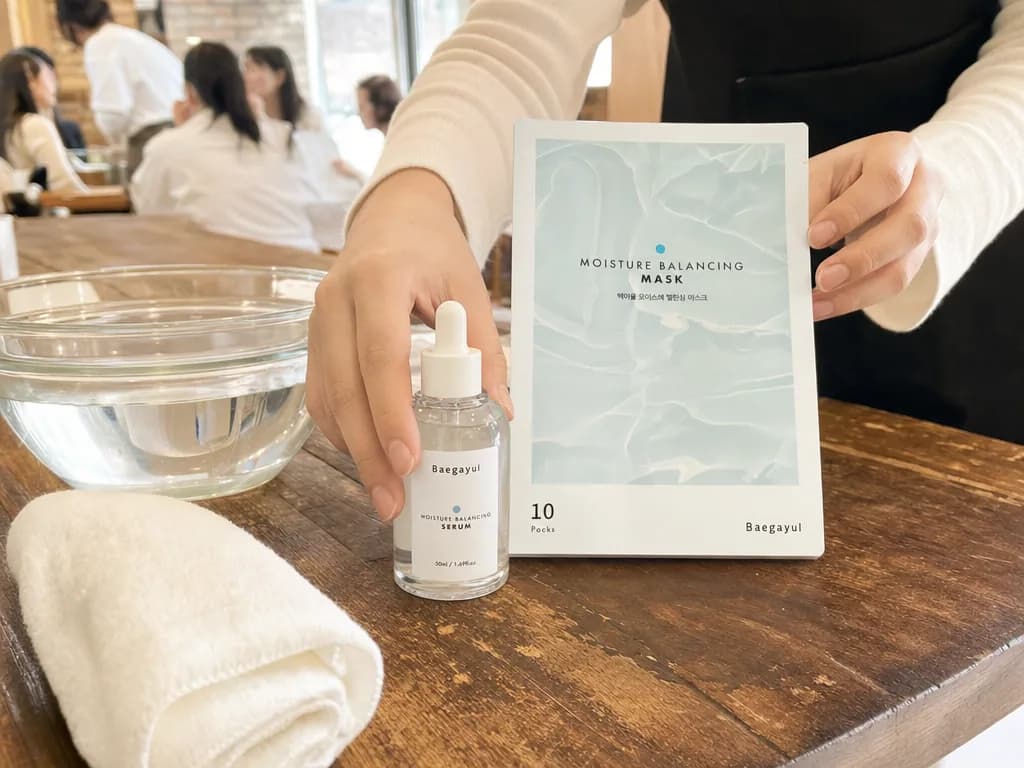
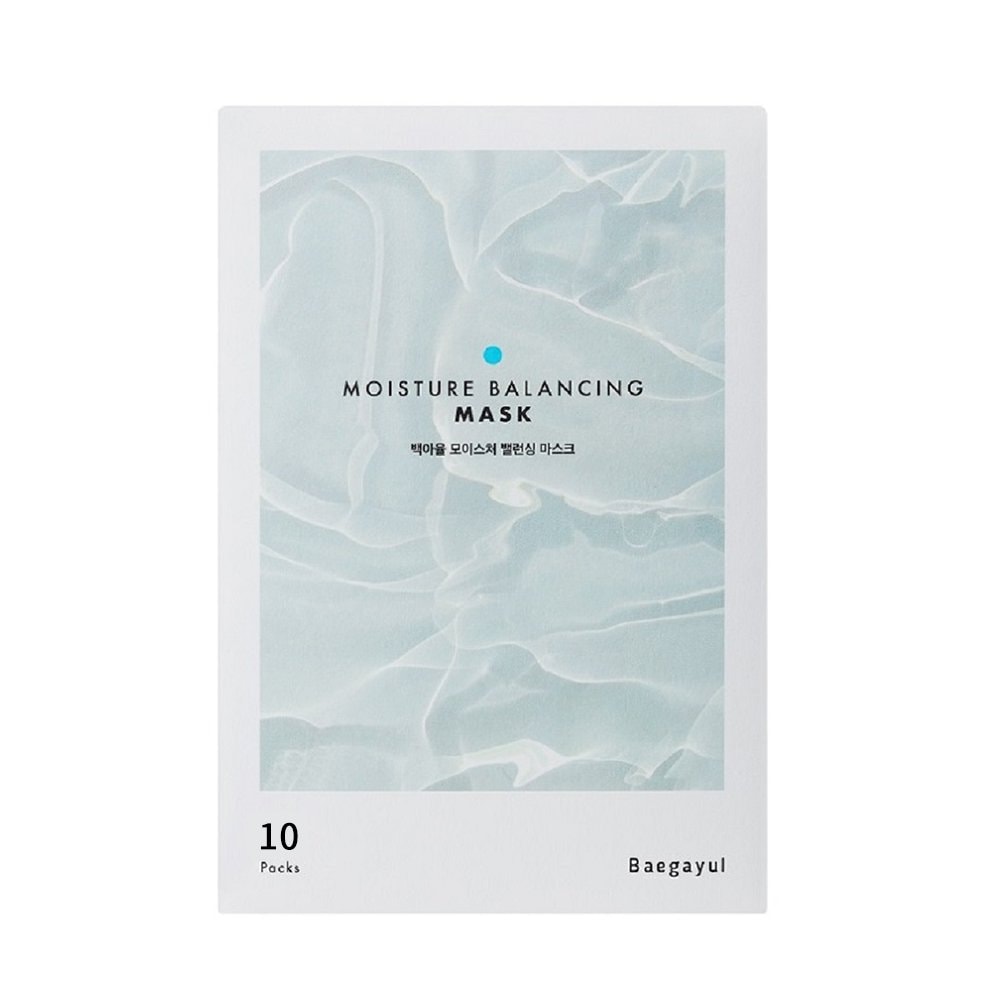
The Moisture Balancing Mask is a fragrance-free water-gel sheet mask, 10 sheets per box. Its directions follow the order above: after toner, unfold the sheet and smooth it over clean skin; leave it on for fifteen to twenty minutes, then remove; pat in the remaining essence and follow with moisturizer. In the morning, finish with sunscreen before going outside.
- Baegayul Moisture Balancing Mask, product page and directions Source for the product-specific sequence and the fifteen to twenty minute wear time.
- Short-term skin reactions and changes in stratum corneum following different ways of facial sheet mask usage, 2024 Randomized study of mask types and wear times in healthy volunteers; not a Baegayul study and not a study of routine order or weekly frequency.
- American Academy of Dermatology, sunscreen FAQs Source for the broad-spectrum, SPF 30 or higher, water-resistant recommendation and daily outdoor use.
Related reading: Hydration and moisture are not the same thing
This article is intended for general education about skincare and cosmetic ingredients. It is not medical advice and does not diagnose or treat any condition. If a concern persists or worsens, please consult a licensed dermatologist.