The short answer. Not necessarily an extra cosmetic. Cleansing, moisturizing and sun protection are a useful basic routine. An additional cosmetic marketed around a particular ingredient is a choice for a specific goal, not a stage every routine must reach. This is separate from medicines: follow over-the-counter Drug Facts directions and your clinician's instructions for prescribed treatments.
What does "active" actually mean?
In everyday skincare marketing, "active" is loose language for whichever ingredient a product wants to highlight: retinol, exfoliating acids, vitamin C. US drug regulation uses the term precisely. An over-the-counter drug carries a Drug Facts panel whose Active ingredient section names the component responsible for the labeled effect. The FDA explains that intended use, not an ingredient name, decides whether a product is a cosmetic, a drug or both, so a cosmetic label naming an ingredient is not a drug claim. The marketing sense of the word tells you nothing about what the product will do for your skin. FDA: is it a cosmetic, a drug, or both?.
Do you need a product built around an active?
An optional cosmetic earns its place only when you can name what you want it for. Your own situation decides, not a universal rule about when skin is ready.
| Your situation | A reasonable approach |
|---|---|
| Your basic routine is comfortable and you have no specific goal | Nothing needs to be added. Optional cosmetics are not a requirement. |
| You have a defined goal you want to address | Choose one cosmetic for that goal and use it per its own directions. |
| Something keeps causing a reaction | Simplify, stop the product that is reacting, and seek professional advice if it persists or is severe. |
| You use an over-the-counter drug or a prescribed treatment | Those products are not optional cosmetics. Follow the Drug Facts directions or your prescriber's guidance, and ask before layering new cosmetics on top. |
You may have seen routines that describe actives as something your skin has to earn, or that work only after a barrier is repaired. We do not use that framing. A comfortable routine is not unfinished, and no cosmetic purchase is a test of discipline. If you do add a targeted product, change one thing at a time; a single change can make a reaction easier to trace, though it cannot prove the cause. The American Academy of Dermatology suggests testing a new product on a small area before routine use. AAD product-testing guidance.

If you do decide to add one
Pick one product, follow its directions, and keep the rest of the routine steady so a reaction is easier to trace. If a cosmetic keeps stinging or redness persists, stop using it and get professional advice rather than pushing through. This page covers optional cosmetics only: over-the-counter drugs follow their Drug Facts directions, and any prescribed treatment stays between you and your prescriber.
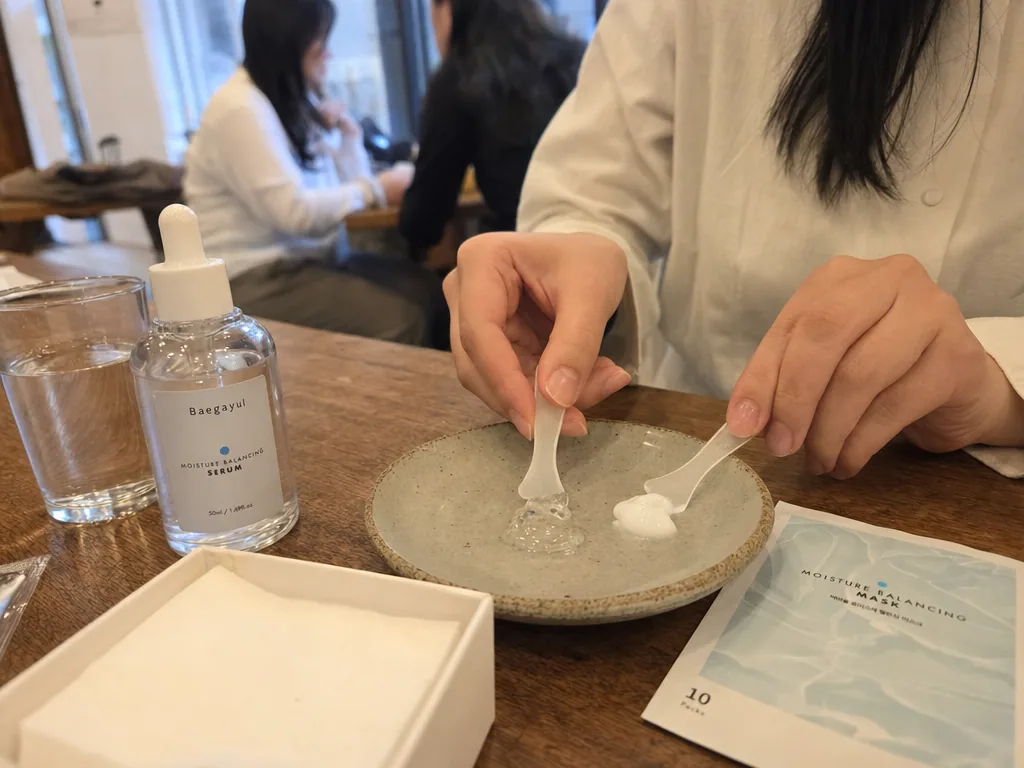
- American Academy of Dermatology, skin care on a budget The simple routine of cleansing, moisturizing and protecting that is already complete without extra products.
- American Academy of Dermatology: how to test skin care products Testing a new cosmetic on a small area before routine use, changing one product at a time so a reaction is easier to trace, and stopping products that keep reacting.
- U.S. Food and Drug Administration: is it a cosmetic, a drug, or both? How intended use, not ingredient names, decides whether a product is a cosmetic or a drug under US law.
Changing one thing at a time: How to introduce a new skincare product safely
Combining two ingredient names in one routine? Can you use niacinamide and hyaluronic acid together?
This article is intended for general education about skincare and cosmetic ingredients. It is not medical advice and does not diagnose or treat any condition. If a concern persists or worsens, please consult a licensed dermatologist.