The short answer. No label can guarantee how a serum will feel once it is on your skin, and a bigger percentage printed on the front of the bottle is not automatically a better choice. What you can do before buying is check what the brand actually publishes: the complete ingredient list, the directions, the texture description, and how the product would sit inside the routine you already use.
Choosing is inference, and that is normal. A label tells you what is in the bottle and how the maker intends it to be used. It does not carry the finish or the tack, and it cannot know your skin. The useful skill is knowing which parts of a listing answer which question, and which questions no listing can answer.
What can you check before you buy?
Each row below is something a shopper can verify on a product page or packaging before paying. None of it is a promise about feel.
| Shopping question | What you can check | What the label cannot prove |
|---|---|---|
| What is in the formula? | The complete ingredient list on the product page or packaging | A list shows what is included, not how the finished blend will feel or perform |
| How is it meant to be used? | The brand's directions for amount, order and frequency | Directions describe intended use, not a guaranteed result |
| How is the texture described? | The texture wording and photographs on the current page | Words like light or non-sticky are descriptions, not measurements |
| Will it fit your routine? | Whether the directions sit comfortably beside your existing cleanser and moisturizer | An ingredient list cannot predict how your own routine will tolerate it |
| Can you try it first? | Whether the seller states a sample, trial or return policy | A policy, where one exists, covers the purchase, not your skin's response |
Is more hyaluronic acid always better?
No. A percentage alone does not describe the complete formula or predict its finish. In a 2021 laboratory study, researchers measured the stringiness of model emulsions containing hyaluronic acid of different molecular weights with a benchtop instrument. That work describes model-emulsion rheology under controlled stretching. It is not a test of a finished product or of how skin feels, so nothing in it transfers to a serum you can buy, ours included.
A worked example, disclosed as ours
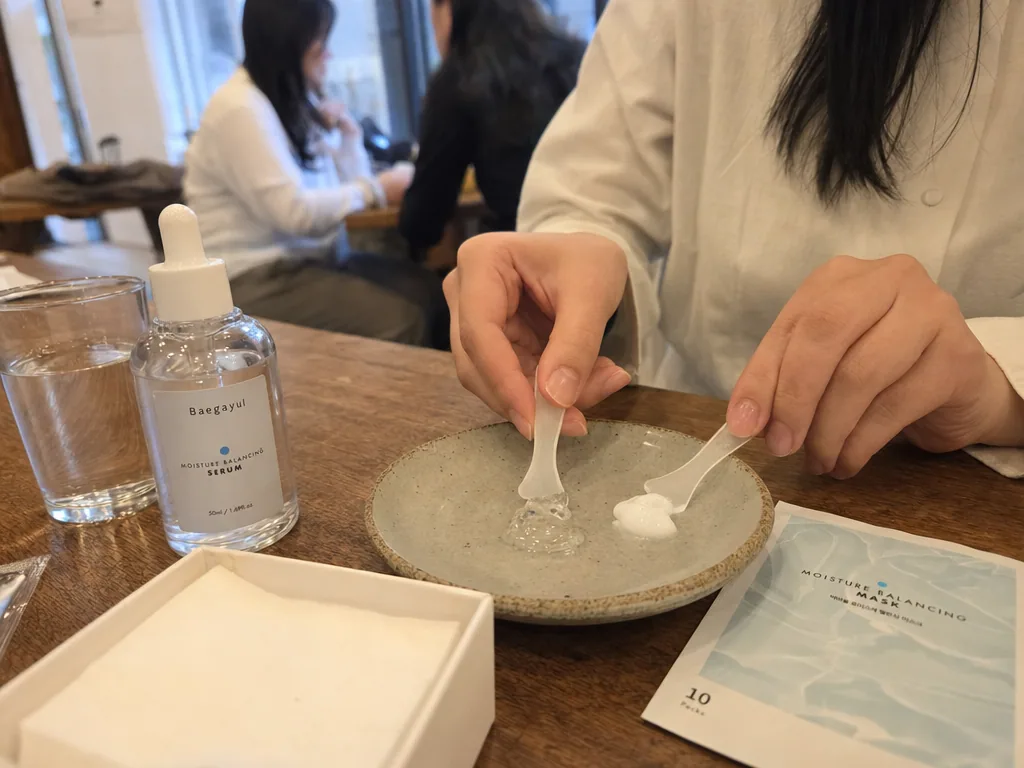
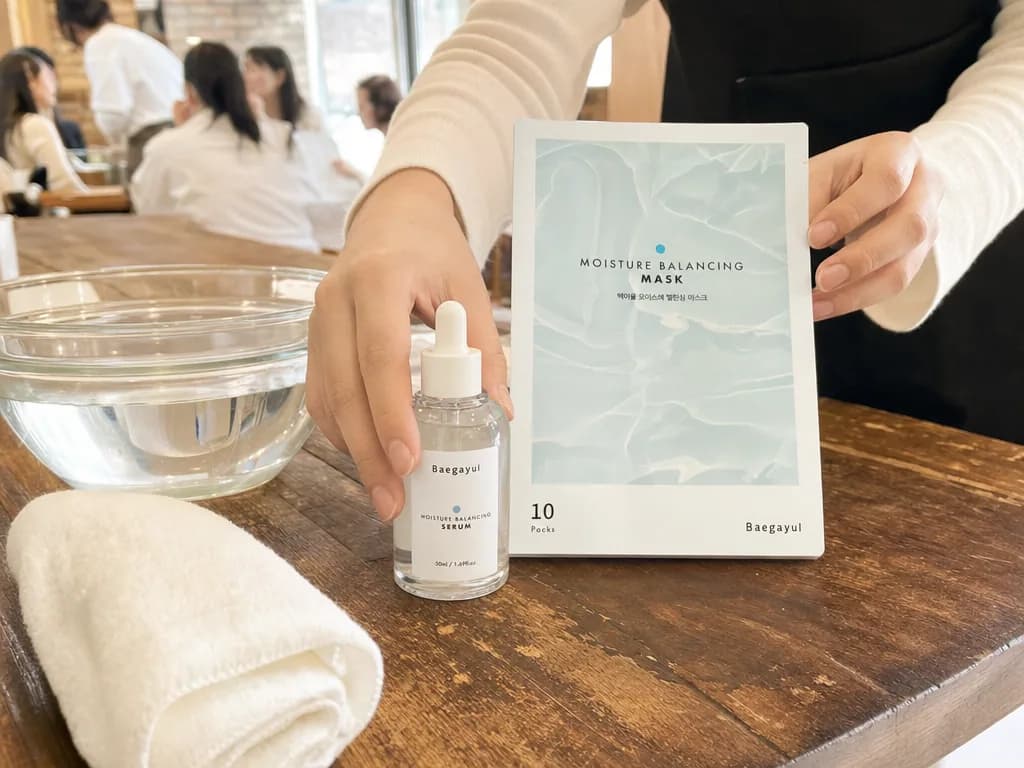
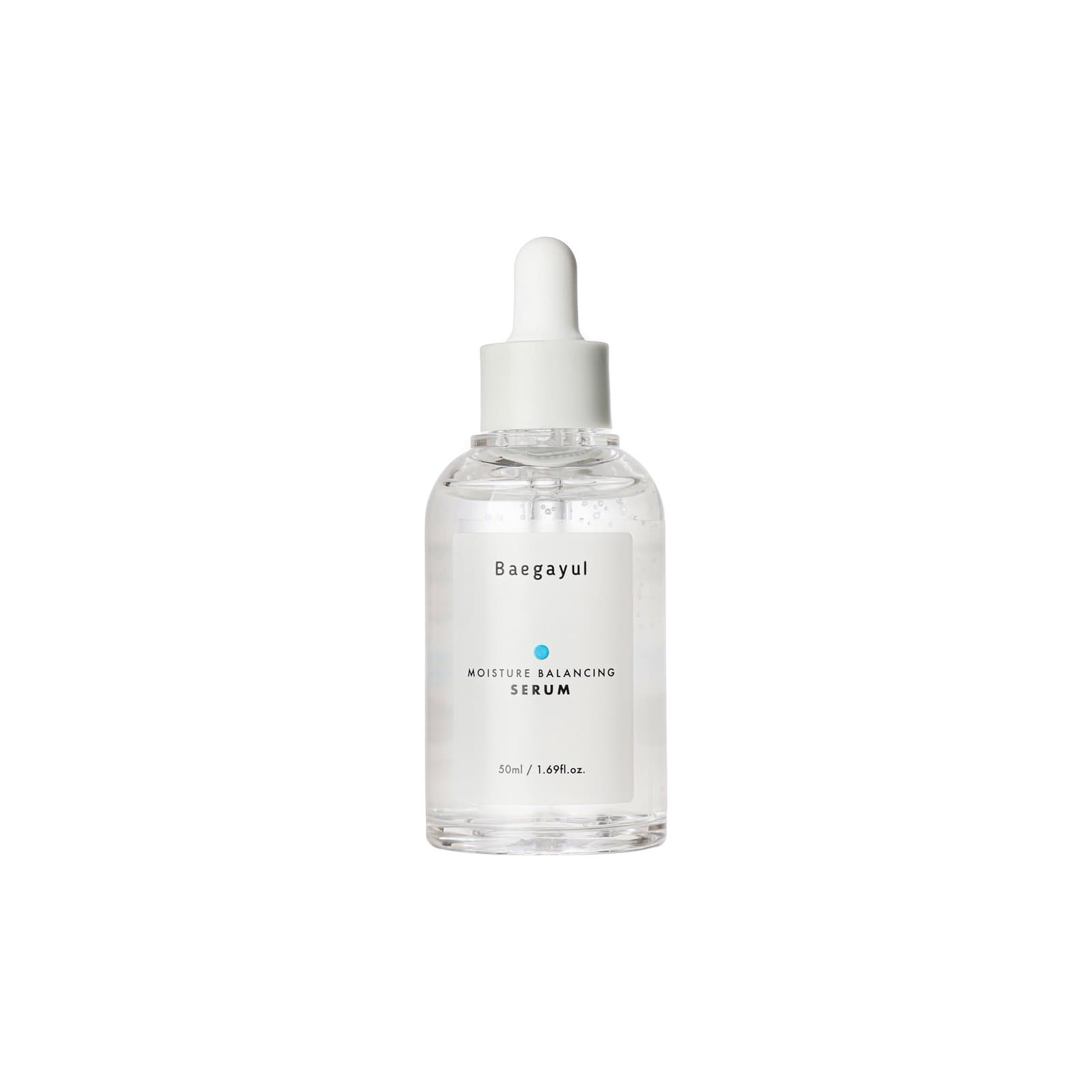
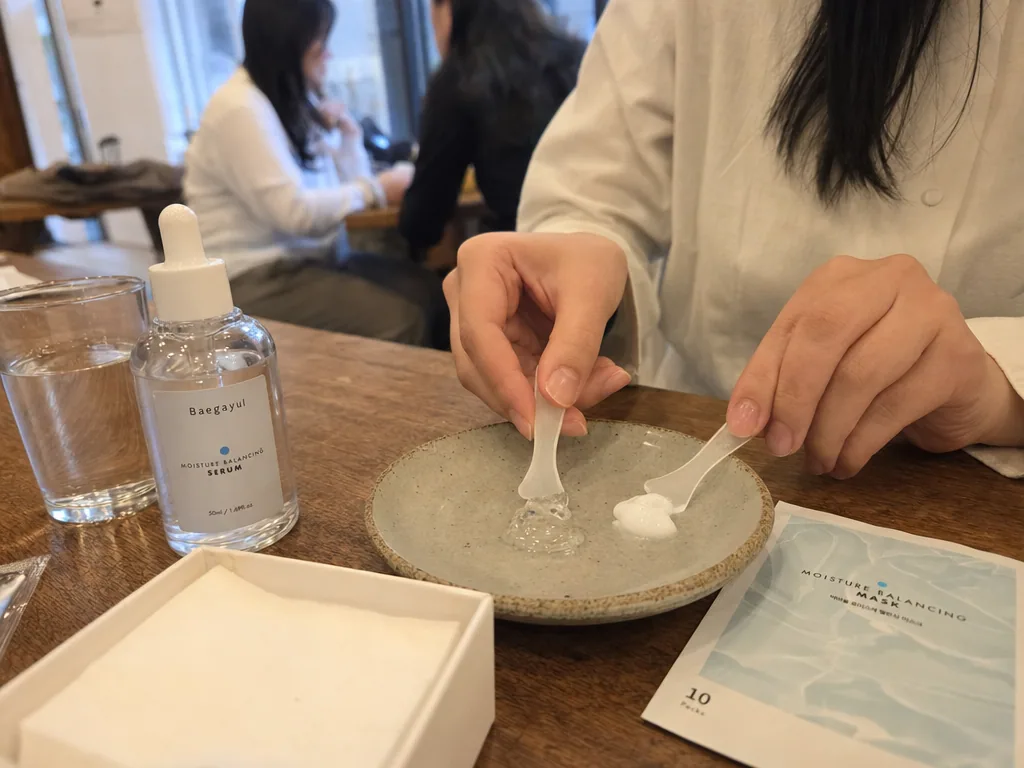
Here is what those checks look like on a real page, using our own product because we can vouch for the facts. The Baegayul Moisture Balancing Serum is a fragrance-free hydrating serum that lists sodium hyaluronate, glycerin and betaine among its selected ingredients. Its directions place it as an optional single hydrating layer after cleansing, or after an optional toner, before moisturizer. This is a disclosed own-brand example of the checklist above, not an independent ranking and not a promise that it will never feel sticky on you.
Once a serum is home, the usual guidance is modest: follow the product's own directions and change one thing at a time, which can make a reaction easier to trace. If a serum you already own feels tacky or pills under the next step, that is a troubleshooting question with its own answers.
- American Academy of Dermatology: how to test skin care products Testing a new product on a small area before routine use; the tolerance boundary that applies to any formula, including ours.
- American Academy of Dermatology, skin care on a budget A simple routine does not require expensive products; a higher price is not the same as a better result.
- Stringiness of Hyaluronic Acid Emulsions, 2021 laboratory study Model-emulsion rheology under instrumented stretching; not a finished-product or skin-feel test, and not evidence about any Baegayul formula.
New to the ingredient names? Sodium hyaluronate vs. hyaluronic acid: what the label means
Already own one that feels sticky? Why a hyaluronic acid serum can feel sticky
See our own label: Baegayul Moisture Balancing Serum
This article is intended for general education about skincare and cosmetic ingredients. It is not medical advice and does not diagnose or treat any condition. If a concern persists or worsens, please consult a licensed dermatologist.