

Dr. Jo Seok-yong began researching Korean botanical ingredients for the skin in 2007 while working with patients near Gangnam Station in Seoul. The same need kept appearing: reactive skin did not need more noise. It needed calm, moisture, and enough time to find its balance again.
One patient before one brand
The turning point was a bride-to-be who came to Dr. Jo for treatment weeks before her wedding. He personally formulated an herbal-extract ointment for her by hand, drawing on the Korean botanical knowledge he had studied in practice. She told others. Word traveled. Demand eventually grew beyond the clinic.
That patient came before the company, the packaging, and the awards. Her story explains why Baegayul begins by asking what skin can comfortably keep, not what else someone can be persuaded to add.
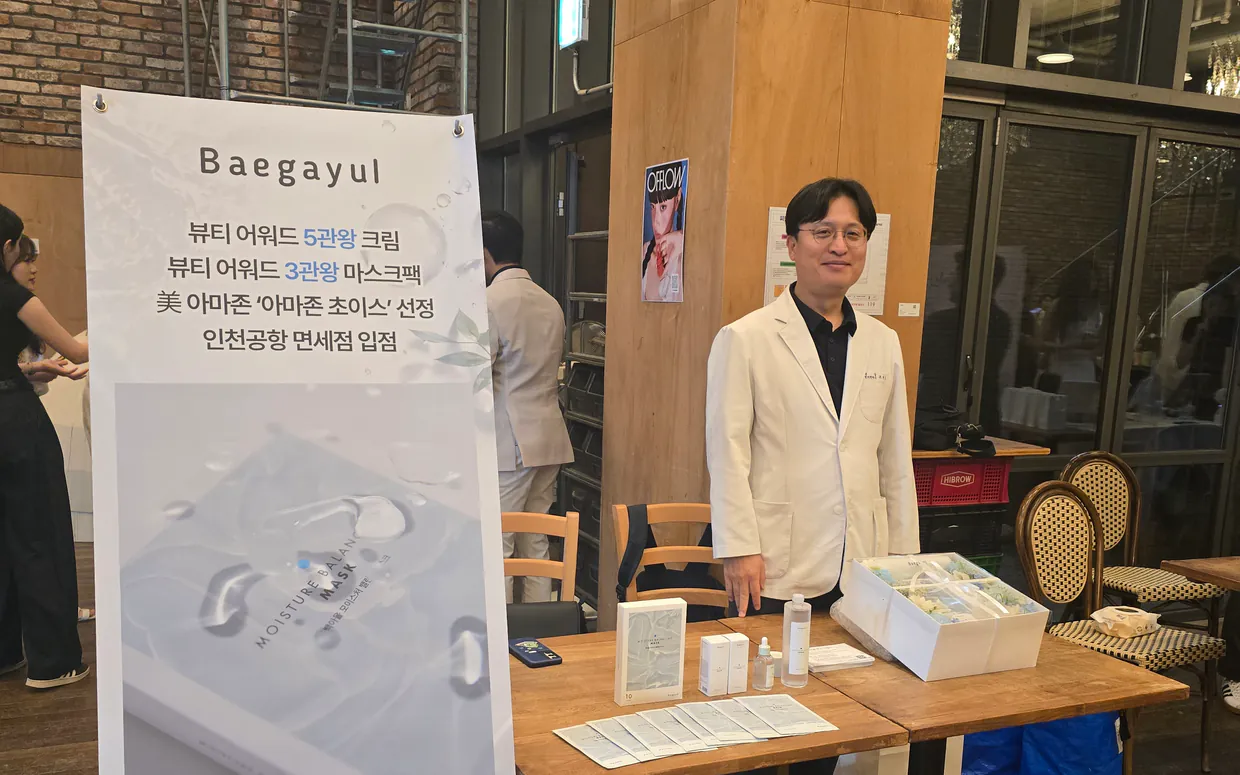
Why the ritual stays small
In 2017, Dr. Jo founded Bluecellab to carry that principle from the clinic into cosmetics. The Baegayul ritual sold in the United States is intentionally short: one hydrating serum for daily use and one mask for a weekly reset. Each has a clear job, and neither asks someone with reactive skin to rebuild the whole shelf.
A founder's role should mean more than putting a portrait on a page. The brand should keep answering to the problem that made it necessary. For Baegayul, that problem is reactive skin overwhelmed by too much.
What Baegayul asks of a routine
Give reactive skin room to move slowly. Choose a short routine, introduce one change at a time, and stop when something stings or keeps feeling uncomfortable. The goal is not to make skincare more exciting. It is to help skin feel steady enough that the routine becomes ordinary. That steady rhythm is the meaning Baegayul keeps returning to.
This article is intended for general education about skincare and cosmetic ingredients. It is not medical advice and does not diagnose or treat any condition. If a concern persists or worsens, please consult a licensed dermatologist.


